Why a SEPA transfer comes back — and what your bank is actually checking
A euro transfer that comes back is nearly always a decision taken inside the banking system, not by the platform you sent it to. The money left, sat somewhere for a day or three, and reappeared in your account under one vague line of explanation. Nothing is lost. Something failed a check — and the check has a name, you just have to get someone to tell you which one.
What actually happened to your money
Sending euros over SEPA is a push payment. Your bank debits you, hands the instruction to the network, and the receiving bank decides whether to credit it. If it decides not to, nobody phones you — the payment is pushed straight back down the same rail with a structured reason attached to it. That reason lands in your bank's systems. It does not land in your banking app.
The gap between those two things is the whole problem. Your screen says returned. The reason sitting behind it says something far more specific, and until you have it you are guessing.
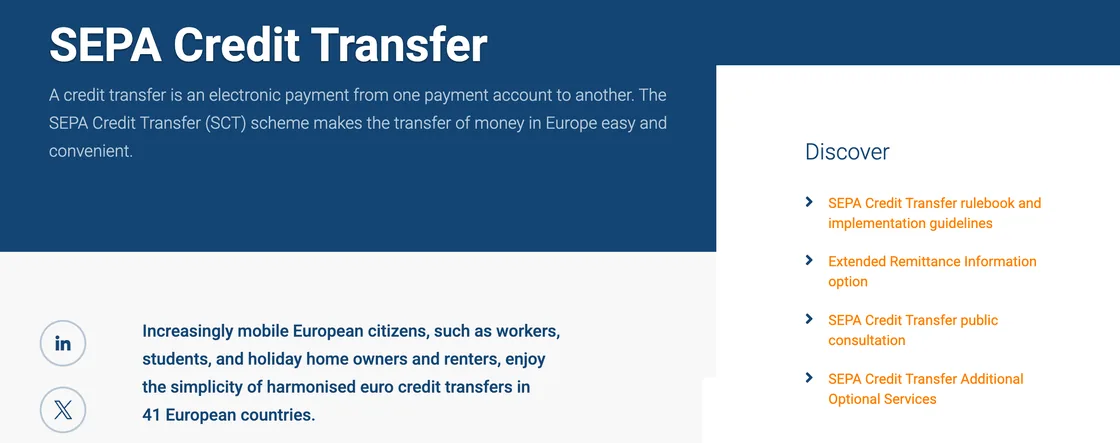
The rail itself is unglamorous and well documented. The European Payments Council writes the SEPA Credit Transfer rulebook, and the scheme covers harmonised euro credit transfers in 41 European countries. Every euro payment you have ever sent runs on it, including the one that came back.
Two practical details before you start phoning anyone. The funds come back to the account they left from, not to a different one you nominate afterwards. And the amount can return slightly lighter than it went out, because a handling fee can be deducted along the way — small, but it catches people out when they reconcile.
Five things that send a euro transfer back
Sort your case by what you saw, then read the matching explanation below.
| Symptom | Usually means | Where the fix lives |
|---|---|---|
| Back within hours, no reason given | Beneficiary name did not match the account | You, on the next attempt |
| Back after two or three days | Manual review at the receiving end, then declined | Ask your bank for the return reason |
| Never arrived, never returned | Reference missing or mangled, so the payment could not be allocated | Support at the receiving end, with your proof of payment |
| Blocked before it even left | Your own bank's policy on this type of payment | Your bank |
| Returned, and now other payments are restricted too | The pattern was flagged, not just the one payment | Your bank's compliance team |
1. The name did not match the account
Since 9 October 2025, payment service providers in euro-area member states have had to run a verification-of-payee check before a euro credit transfer goes out. It comes from Regulation (EU) 2024/886, Article 5c: your bank asks the receiving bank whether the payee name you typed matches the account identifier you typed, and tells you the answer before you authorise. Providers in non-euro member states have until 9 July 2027, which is why the experience still differs depending on where you bank.
A mismatch does not automatically stop anything. You are shown a warning and you can go ahead regardless — and that is exactly where people lose a week. A deposit account at a crypto platform is very often held in the name of a payments institution or a client-money entity, not the brand name printed on the app you are using. If you overwrite what the deposit screen gave you because it looks wrong, you get a warning, click past it, and the receiving bank later returns a payment it cannot reconcile. Copy the beneficiary name exactly as given, legal suffix included, even when it looks like the wrong company. It usually is the right one.
2. A stale or retyped IBAN
Deposit IBANs are not always permanent, and they are not always the same one your friend was given. Retyping introduces transpositions that survive the checksum often enough to matter, and reusing an IBAN saved in your bank's payee list six months ago is a classic. This failure mode looks exactly like a platform problem and is not one.
3. The reference went missing
The reference — sometimes called a payment ID, sometimes just a string of characters — is how the receiving institution maps an incoming euro amount to your specific account. Without it the money arrives somewhere real and belongs to nobody. Depending on the receiving side's rules it either waits for a human or gets returned after a set period.
Watch for banks that offer two free-text boxes: a reference field and a message-to-payee field. Only one of them travels in the field the receiving system reads. Some banks also truncate long references or strip characters. Check what actually got sent, not what you typed.
4. The receiving side, or your own bank, declined the counterparty
Some banks do not want the destination. It can be a blanket policy on crypto-related payments, an internal list, or the residue of a complaint another customer filed last month. Banks do not publish these rules and will not debate them with you. What you can get is a yes or no on whether the block sits on your account or on that beneficiary — ask that question in those words.
5. The size or shape of the payment
A first payment to a new payee, a suspiciously round number, an amount that is a large fraction of your normal monthly turnover, or several transfers in quick succession will all pull a payment into manual review. The first one is the most exposed, simply because there is no history to compare it against. This is also why the second transfer, identical in every respect, often sails through.
What the bank is checking on its side
Banks in the EU run risk-based anti-money-laundering monitoring, which in plain terms means software scores payments and a human looks at the ones that score badly. The questions behind the score are dull: is this consistent with what we already know about this customer, do we understand where the money came from, do we understand where it is going, and does this person actually control the destination.
That last one carries more weight than people expect. Euros going to a platform account in your own name is a simple story. Euros going to an account held by someone else — a friend, a broker, an agent who offered to buy on your behalf — is the shape of a fraud from the bank's side, because most of the time it is one. Those payments get returned, and the bank is right to return them.
If someone from the bank calls, the honest short answer is also the effective one: the money is savings, it is going to a regulated European platform in your own name, and you are buying crypto with it. Have something to hand that shows where the funds came from — a payslip, a statement showing the balance building up, a sale contract. Dressing it up as something else is how a returned payment turns into a closed account.
If your platform account rather than your bank account is the one that has gone quiet, that is a different problem with a different fix — see what to do when an account is restricted.
How long is too long?
Check which rail you were on before assuming anything failed. The two behave nothing alike.
- SEPA Instant either arrives in seconds or fails immediately. There is no such thing as an instant transfer that is quietly pending. If the app still says processing the next morning, it was never instant, whatever the button was labelled.
- Standard SEPA is a business-day rail. Sent on Friday afternoon, it may not move until Monday. Public holidays in the sending country, the receiving country, or the settlement calendar all eat days.
The rough line we work to: a standard transfer sent before your bank's cut-off should be creditable on the next business day, and two business days with nothing — no credit, no return — is when a phone call is justified. Below that you are mostly paying for your own anxiety.
The worst-feeling case is neither credited nor returned. That usually means the money arrived and could not be allocated, which points at the reference rather than the name or the IBAN. It gets solved by the receiving platform's support team with your payment confirmation attached, not by your bank.
The first 48 hours
Save the evidence before you touch anything
Export the outgoing payment as a PDF from your bank, not a photo of a phone screen. It needs the date, the amount, the full beneficiary IBAN, the beneficiary name as sent, and the reference as sent. Every conversation from here asks for exactly this, and the as-sent part is what nobody can reconstruct later.
Ask your bank three questions, in this order
Was the payment returned by you or by the beneficiary bank? What is the return reason that came back, word for word? Is there a block in place on my account, or on this beneficiary, for future payments? Ask for the answers in writing or keep the chat transcript. Front-line staff sometimes read the code out reluctantly, but they can read it.
Do not simply send it again
An identical resend before you know what failed usually produces an identical return, and now you have two flagged payments instead of one. Once you know which field was wrong, fix that one field from the current deposit screen and send a small amount first.
Check the receiving side too
An account that is mid-verification or restricted can refuse deposits at the door however clean the transfer was. Verification that keeps failing and account restrictions both do this quietly, without telling your bank anything useful.
Making the next one go through
Nothing here is clever. It is just the set of habits that stops the same week repeating.
- Copy and paste the IBAN and the reference. Never retype either, never tidy the spacing.
- Use the beneficiary name exactly as the deposit screen gives it, including the company suffix.
- Put the reference in the reference field. If your bank offers a second free-text box, that one probably does not travel.
- Send a small amount first, let it land, then send the real one. A corridor with history behind it gets reviewed less.
- Keep using the same sending account. Rotating between banks resets the history every time.
- If your account is not in euros, convert to euros before sending rather than letting the transfer convert in flight — the euro deposit walkthrough covers that step.
- If bank transfers keep failing for reasons nobody will explain, P2P is the usual fallback in this part of Europe, with its own trade-offs.
Getting money in is only half the round trip. Money going out carries its own information requirements — the ones that make a withdrawal ask for the recipient's name — and those come from a different regulation entirely. The Travel Rule guide covers that half.